Which reverse osmosis system is right for my home?
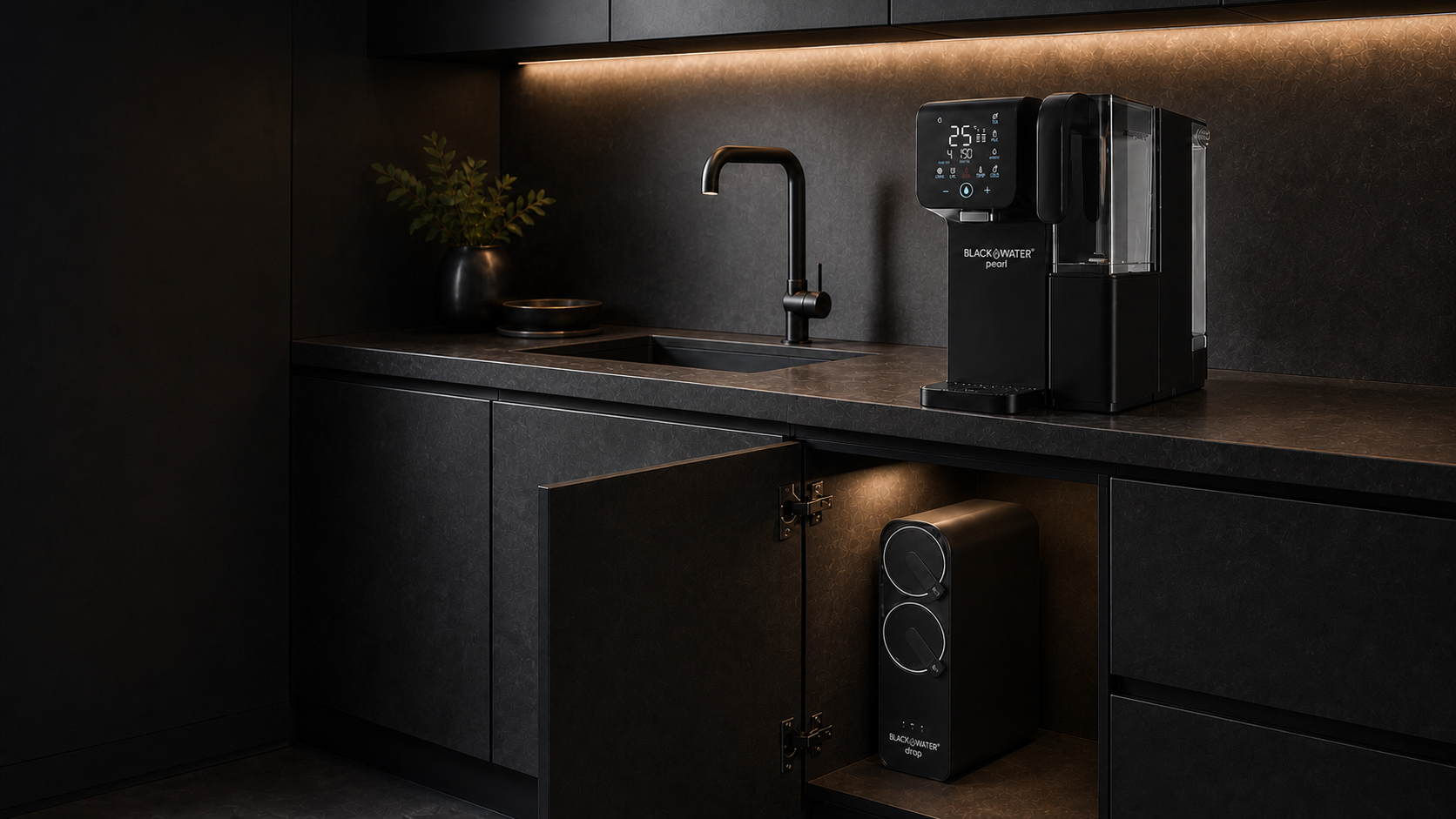
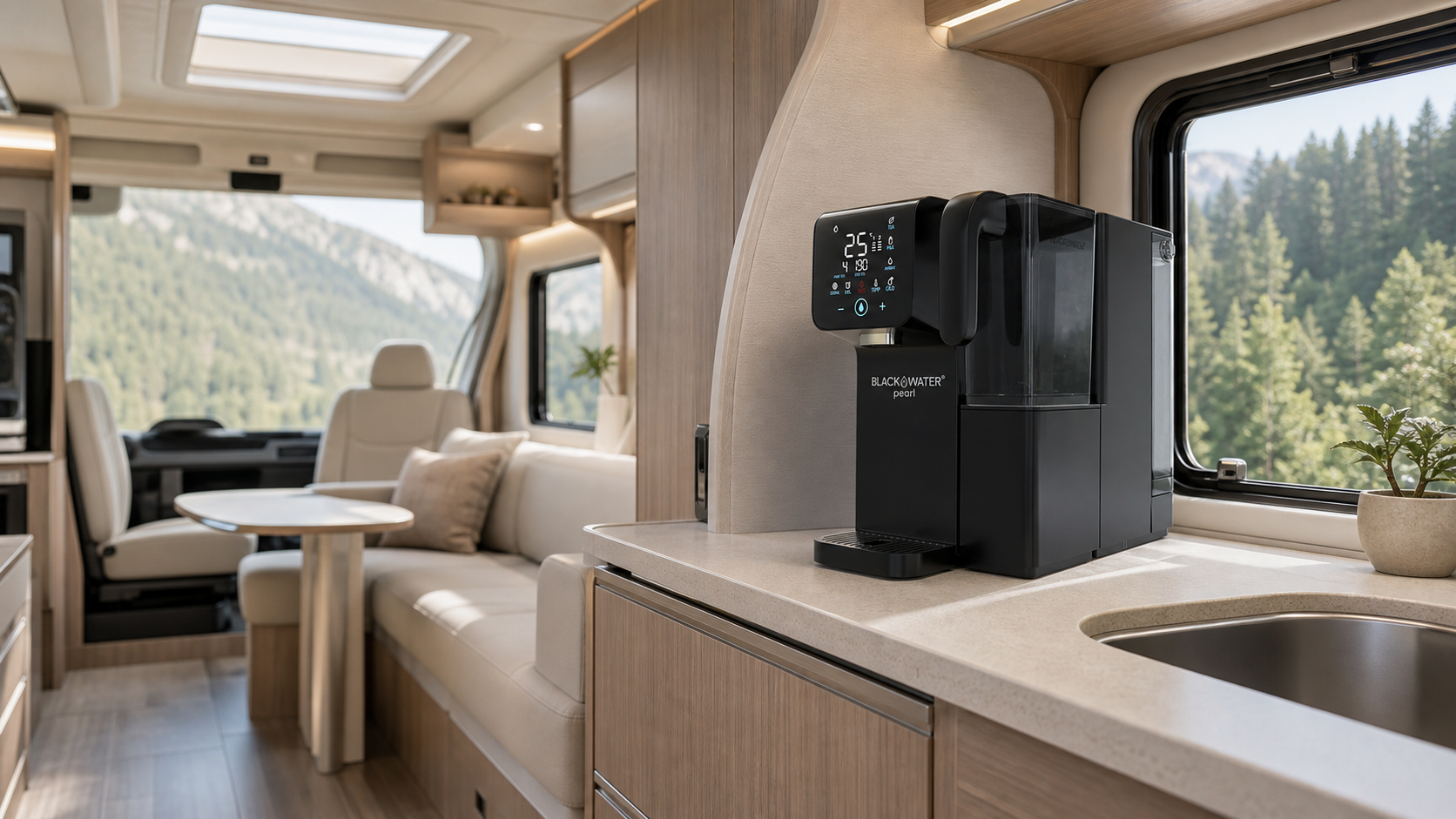
Drop is designed for integrated direct-flow use beneath the sink. Pearl sits on the countertop, needs no fixed water connection and offers selectable water temperatures. Your available space, daily demand and installation preference determine the better fit.
Does reverse osmosis remove every substance?
No treatment technology should be described as removing absolutely everything. Performance depends on the substance, inlet water, maintenance and verified test conditions.
Do the systems add minerals?
Both systems include post-treatment intended to condition the water and support a balanced taste. See the product documentation for the exact configuration.
How often are filters replaced?
Typical intervals are 6–12 months for PCB stages and 12–24 months for the RO membrane. Usage and inlet-water quality can change these intervals.
Which system works in a rented apartment?
Pearl is the simplest option when you do not want a fixed water connection. Drop is designed for permanent under-sink integration.
How much wastewater does reverse osmosis produce?
Reverse osmosis separates a purified-water stream from a concentrate stream. Drop provides a purified-water-to-concentrate ratio of 1:0.5 at 2 bar and 20°C. Pearl provides 1:0.25, producing 4 litres of purified water from 5 litres at 20°C.
Is reverse osmosis water the same as bottled water?
No. Bottled waters vary widely in origin and mineral composition. A home system treats your local inlet water on demand and avoids regular bottle transport and storage.
What does a TDS reading tell you?
A TDS meter estimates the conductivity of dissolved, electrically conductive substances. It can help monitor changes in membrane performance, but it does not identify individual compounds and cannot by itself prove drinking-water safety or the absence of contaminants.
What is the difference between osmosis and reverse osmosis?
Osmosis is the natural movement of water across a semipermeable membrane towards a more concentrated solution. Reverse osmosis applies external pressure to move water in the opposite direction through the membrane.
Is a direct-flow reverse osmosis system noisy?
The pump and internal water movement may be audible while water is being produced. Sound level and run time depend on the model, installation, inlet pressure and flow. There is no continuous water production in standby.
Can reverse osmosis be used with hard water?
Generally yes, provided the inlet water remains within the product specification. High hardness can place greater demand on filters and membrane, shorten service intervals and make appropriate pre-treatment advisable.
What maintenance does a reverse osmosis system need?
Filters and membrane are replaced according to volume, time and system status. Hygienic cleaning, flushing and checks of connections and seals are also important. Always follow the instructions for the individual model.